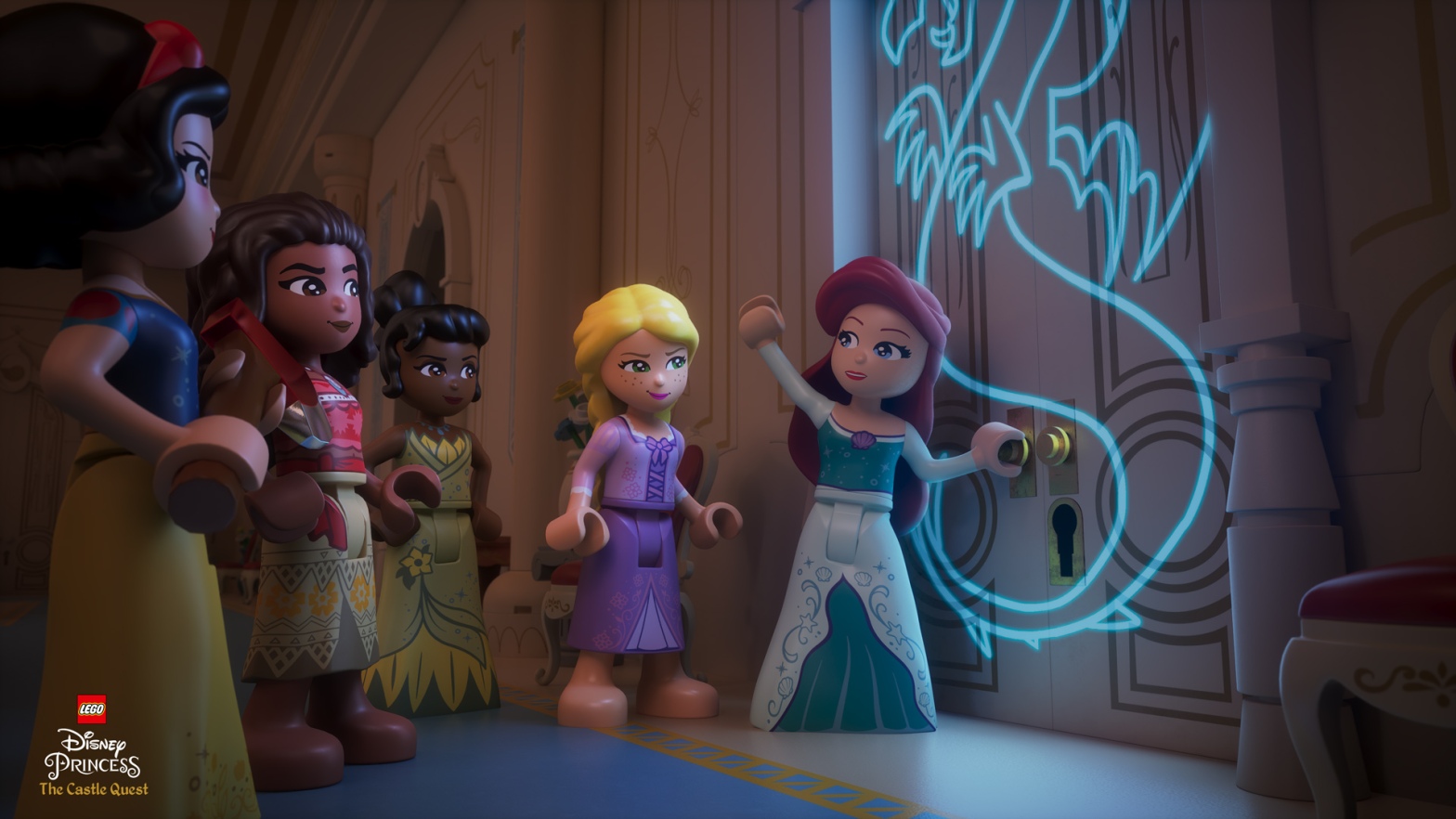
An axe wielding Snow White? A saucepan brandishing Rapunzel? Why it could only be Disney’s Princesses in The Castle Quest. Written and directed by Michael Black of Pure Imagination Studios, this streaming special follows five of Disney’s most beloved princesses on a quest to save their respective kingdoms from an evil plan hatched by none other than Gaston!
This fun adventure through eerie forests, tangled mazes and stormy oceans exhibits a world so rich in texture and vibrance that it necessitated a different approach to filmmaking, but one that is increasingly incorporated by some of the most forward-looking filmmakers.
This new approach takes the form of a tool from Epic Games, Unreal Engine, an advanced real-time 3D creation tool that gives filmmakers a level of control that was unheard of just a few years back. Michael Black is a big proponent of its use, and quickly found it to be an invaluable tool.
“Unreal was crucial to getting this project done and looking as good as it did. This was the first project where I was actually able to virtually walk a set and find shots like a director looking through a viewfinder. This was especially important since not all of the storyboards translated perfectly to the 3D sets, so I was able to interpret the boards using Unreal to block out camera, action, etc. in a way that significantly sped up the process.”
Though it may be obvious what creative opportunities Unreal is able to offer, what may be lost on the casual observer is the way it expand’s the director’s role, who in the past may have felt hamstrung by tools not available to him, and processes that were beyond his/her job title. Black elaborates:
“Prior to Unreal, blocking out a scene in 3D was never in my toolbox. but I was able to pick it up easily and essentially hand that over to the animation team for them to work from. This probably saved us weeks and cut down on layout retakes. The beauty of the process too is that while we’re still working off a storyboard, once we get into Unreal, all the processes begin to blur. I can start blocking a scene and tightening up the timing as I go through it, effectively pre-editing the 3D all the way down to the end product where we’re making framing or timing adjustments with final lit material. For these lower budget projects, that was unheard of before.”
But it wasn’t just the blocking stage where Unreal proved critical. It’s use stretched all the way into rendering the final frames before the online process:
“Using Unreal as a render tool was tremendous. Where once it would take days to get a rendered retake, I was now getting retakes within 12 hours of giving a note. We were able to make on-the-fly adjustments and really dial in our look on a shot-by-shot level. I’m a big stickler for details like motion blur and depth of field and being able to make those adjustments with ease made me indescribably happy with the look!”
From a color perspective, The Castle Quest is a movie that has a lot to offer. From the distinct look of each location, designed to evoke particular emotions and define a space, to the way the palette was employed to signpost specific story points and highlight both the struggles and despair the princesses experience, it all works seamlessly to heighten the story and accentuate each arc. Pepper Tree Post colorist Milton Adamou was responsible for the grade, starting with pristine-quality ACES 4K EXR files. “The clarity of these images were just incredible! To think that these final renders were pretty much what was visible in the Unreal Viewport, during production, is mind-blowing.”
So what’s next? Black wants to keep going: “The next step is further blurring those lines between the processes. I really want to see a scene coming together more collaboratively with lighting, animation, camera, set building and everything being worked on in concert. ‘Oh, you need a longer hallway for this action to work? Done.’ or ‘Oh we need to add some finer detail to this wall we didn’t think we were going to see? Easy.’ Where we used to have to live or die by decisions that were made months prior in this sort of assembly line process, we can more actively be improving on something as we go. It’s very exciting.”
Adamou sees this modular way of working stretching all the way into the online and final grade, especially with animation shows: “It could happen. There is a lot of movement with a 3D interchange framework called USD (Universal Scene Description), which allows various 3D applications, compositors and even Unreal to work together. Using an open source color management solution like OCIO (OpenColorIO), XML/JSON and the extensive controls in Unreal’s Post Process plugin…the pieces are there to knit it all together, allowing the grading aspect to become part of the process. Models could get updated, animation could be refined, lighting could be tweaked, all while controlling the overall grade of the shot and the movie as a whole. You heard it here first!”
LEGO Disney Princess: The Castle Quest is streaming on Disney+ now.
 Pepper Tree Post, Inc.